
Anadolu Hisarı: the Asian-side fortress by the Göksu
A late medieval Ottoman fortress where the Göksu joins the Bosphorus, across from Rumeli Fortress.
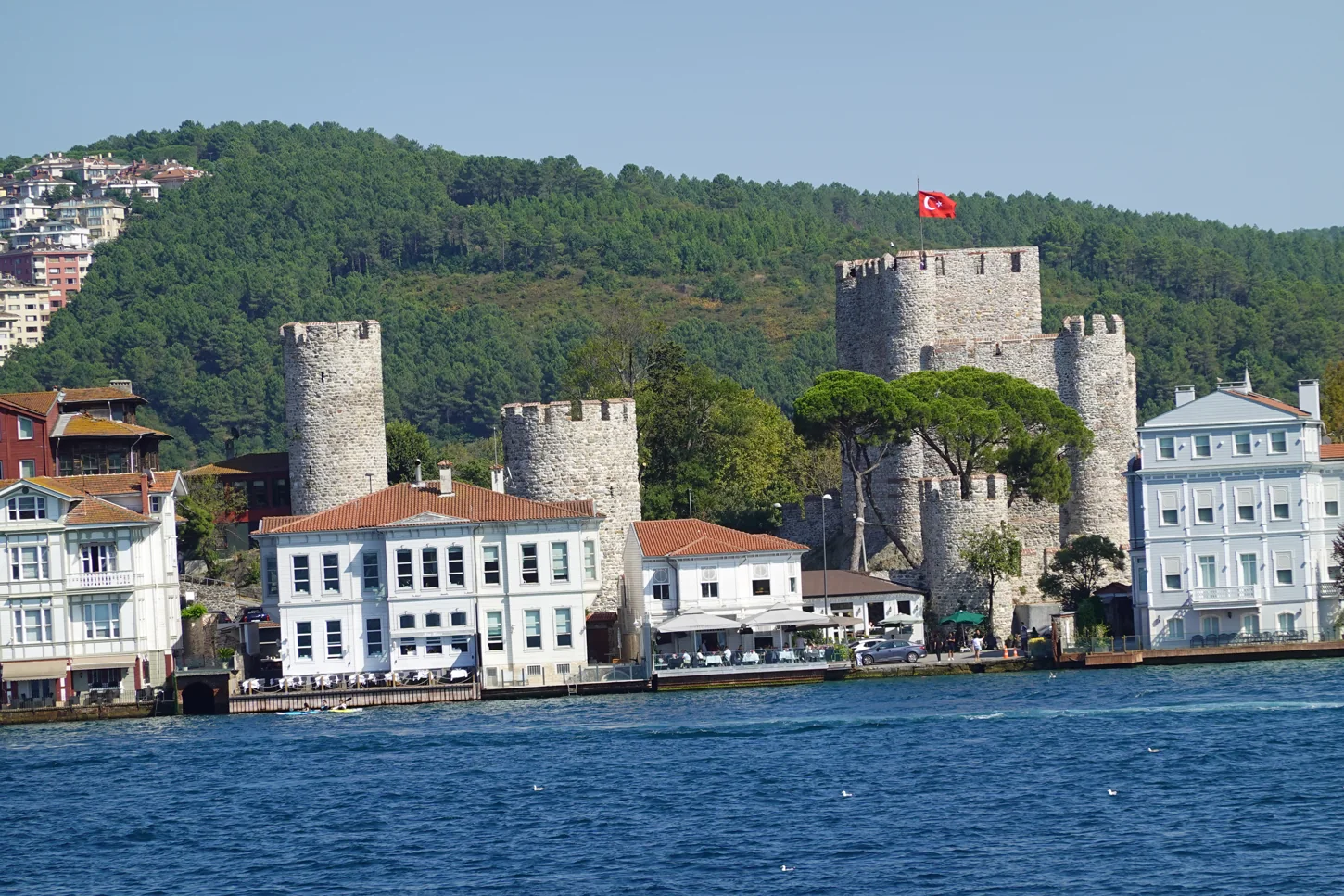
History of Anadolu Hisarı
Bayezid I had the fortress built in the late fourteenth century to help control passage through the Bosphorus. Its position was as important as its walls: it sits at the mouth of the Göksu Stream beside one of the narrowest parts of the strait. The fortress is also known historically as Güzelce Hisar.
Decades later, Mehmed II had Rumeli Fortress built on the European side before the conquest of Constantinople. Looking from one shore to the other explains why the two fortifications mattered. The city of Istanbul later restored Anadolu Hisarı and adapted parts of the complex as museum and exhibition spaces.
Suggested walking route
Walking sequence, not to scale.
- Anadolu Hisarı waterfront
- Fortress exterior
- Göksu Stream
How to get there and what to know
Go to Anadolu Hisarı in Beykoz, not the similarly named Rumeli Fortress. Check current museum access before leaving; the Göksu waterfront and nearby Küçüksu Pavilion are a separate shore outing.
Which side of the Bosphorus is Anadolu Hisarı on?
It is on the Asian side in Beykoz. Rumeli Fortress is across the strait on the European shore.
Plan a separate shore visit
For the fortress and the Göksu Stream, use the shore route above. This guide does not add a stop to a cruise.